Intro
Established in 1946, the United Nations Security Council is the UN’s primary body for maintaining international peace and security. The committee comprises 15 member states, five permanent members known as the “P5 group” (China, Russia, France, and the UK), and ten non-permanent elected members. The Security Council, addressing significant global concerns and challenges, deliberates on matters including civil wars, trans-border conflicts, arms proliferation, and terrorism.
Agenda: Reinforcing Non-Proliferation and Disarmament Mechanisms in Response to the Threat of Chemical Weapons Use in Armed Conflicts: The Case of the Russia–Ukraine War
The ongoing Russia-Ukraine conflict has brought renewed urgency to addressing the persistent threat of chemical weapons use in contemporary armed conflicts, highlighting critical gaps in existing non-proliferation and disarmament frameworks. Despite the near-universal adherence to the Chemical Weapons Convention (CWC) and the established mandate of the Organisation for the Prohibition of Chemical Weapons (OPCW), the international community continues to grapple with credible threats and allegations of chemical weapons deployment, particularly in conflicts involving major powers where traditional accountability mechanisms face significant challenges.
During the conference, the Security Council committee must examine how recent developments in the Russia-Ukraine war have exposed weaknesses in current verification, investigation, and enforcement procedures, while exploring innovative approaches to strengthen deterrence mechanisms, enhance rapid response capabilities, and ensure meaningful consequences for violations. Delegates are called upon to develop comprehensive solutions that address both the immediate crisis and long-term institutional reforms, including improvements to the OPCW’s investigative authority, alternative accountability pathways when Security Council action is blocked, enhanced export control regimes for dual-use chemicals, and robust victim assistance programs that can effectively prevent, detect, and respond to chemical weapons threats in an era of great power competition.

HEAD CHAIR – Yeonjo Ahn
Greetings, esteemed delegates,
I am Yeonjo Ahn, and it is my great honor to serve as the Head Chair of the Security Council (SC) for CSIAMUN XVIII. As we gather to address some of the world’s most urgent threats to international peace and security, I look forward to engaging in thoughtful and decisive debate alongside each of you.
The Security Council holds a unique and vital role in maintaining global stability. Whether through the enforcement of international law, the mediation of conflict, or the protection of civilians, our discussions will reflect the gravity and responsibility of this body. As chair, my role is to facilitate fair, rigorous, and respectful deliberation.
Whether you are a seasoned delegate or attending your first MUN, I am committed to creating a space where all voices are heard and diplomacy thrives. I look forward to witnessing your creativity, leadership, and dedication in crafting meaningful solutions to today’s complex challenges.
Best regards,
Yeonjo Ahn
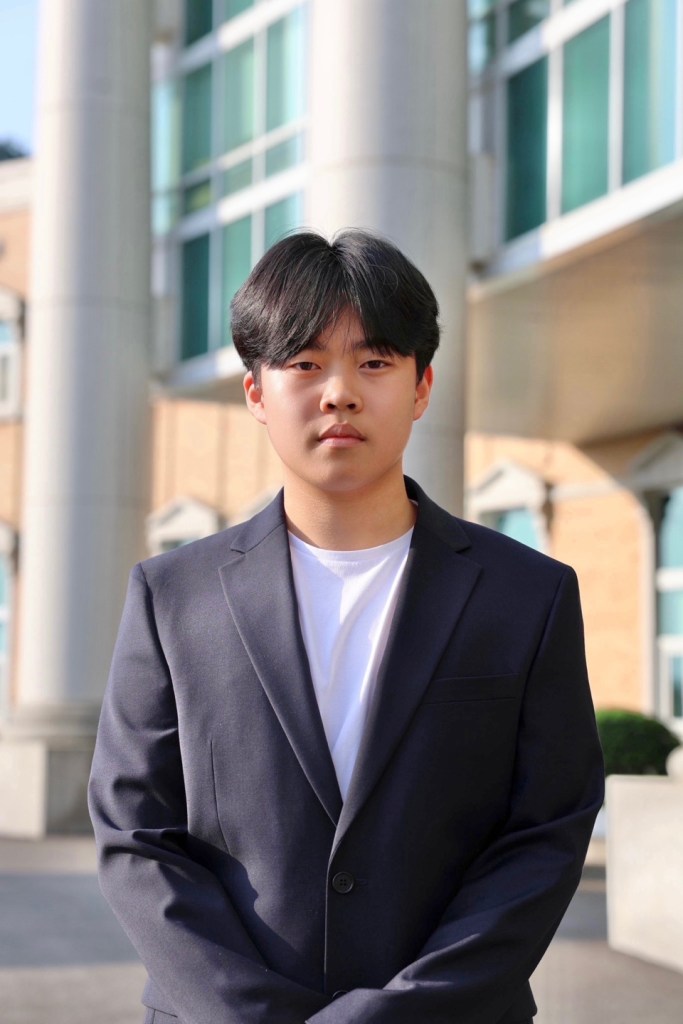
DEPUTY CHAIR – Sunu Jang
Greetings, distinguished delegates,
My name is Sunu Jang,
and I am honored to serve as the deputy chair in the Security Council for this year’s CSIAMUN conference. With a strong interest in international relations and diplomacy, I am more than happy to assist you in high-level discussions about global peace, security, and conflict resolution.
The Security Council plays a crucial role in maintaining international stability, and I am excited to see intense debates, thoughtful negotiation, and collaborative problem-solving. Through this experience, I hope it will help all delegates enhance their understanding of geopolitical dynamics and also develop the skills necessary for diverse future paths.
Whether this is your first MUN or one of many, I look forward to meeting all delegates to produce meaningful, well-informed resolutions. Let us uphold the spirit of diplomacy and responsibility that defines the Security Council.
Best regards,
Sunu Jang
 CSIAMUN